

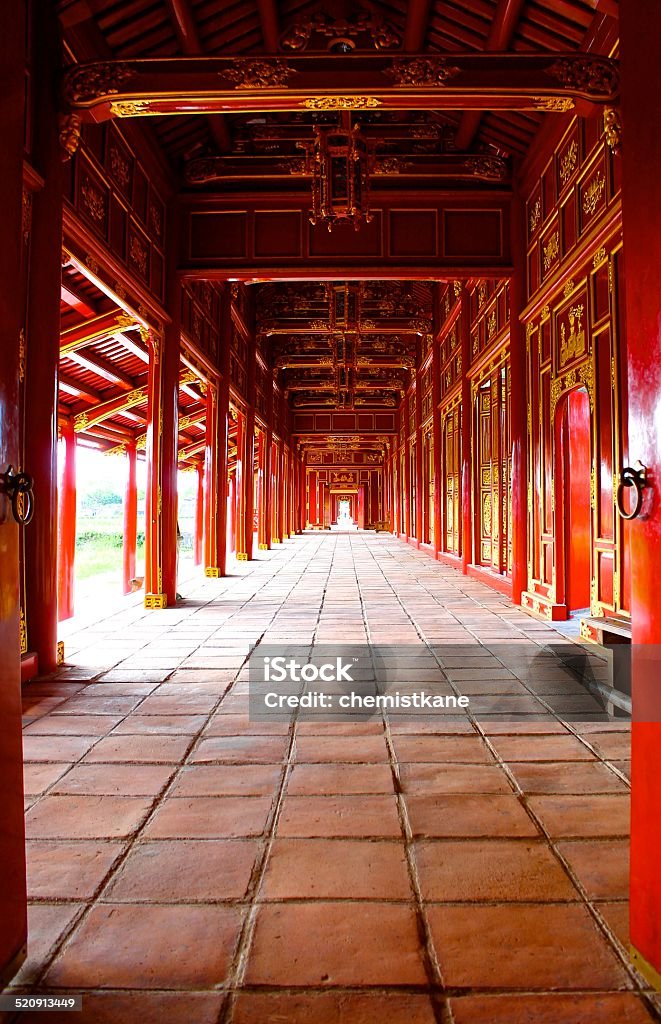
Hue: Ancient Capital, New Experience
Huế, formerly Thừa Thiên Huế province, is the southernmost coastal city in the North Central Coast region, approximately in the center of the country, and an educational, medical, scientific, and cultural hub of Vietnam. It borders Quảng Trị to the north, Đà Nẵng to the south, Salavan and Sekong of Laos to the west and the South China Sea to the east. As one of the country's six direct-controlled municipalities, it falls under the administration of the central government.
Huế has 128 km of coastline, 22,000 hectares of lagoons and over 200,000 hectares of forest. The city is located in the middle of the North Central and South Central regions (including the South Central regions and Central Highlands), and is transitional in many aspects: geology, climate, administrative division and local culture.
Huế and its surroundings is widely known as Xứ Huế (the Land of Huế). What is now the modern city was historically part of Thuận Hóa, a territory ceded by Champa to Đại Việt in 1306 as a wedding dowry. Huế (then known as Phú Xuân) became the provincial capital in 1687, then the capital of Đàng Trong from 1738 to 1775, and of Vietnam during the Nguyễn dynasty from 1802 to 1945. The city served as the Imperial Citadel and administrative capital for the Nguyễn dynasty, and later functioned as the administrative capital of the protectorate of Annam during the French Indochina period.
Huế is today a popular tourist destination, thanks to its extensive UNESCO-designated complex of imperial palaces, tombs and temples. Alongside its moat and thick stone walls, the complex encompasses the Imperial City of Hue, with palaces and shrines; the Forbidden Purple City, once the emperor's home; a replica of the Royal Theater; as well as temples and monuments in the city's outskirts.
MUST-SEE PLACES
THE IMPERIAL & FORBIDDEN PURPLE CITIES


The Imperial City or Imperial Palace, also known as Đại Nội (大內), is a royal enclosure within the walled city of Hue, the former imperial capital of Vietnam during the Nguyen dynasty. It contains the palaces that housed the imperial family, as well as shrines, gardens, and offices for mandarins. Constructed in 1804 under Emperor Gia Long as a new capital and later re-modelled and enlarged to its current scale in 1833, it mostly served as the seat of power and imperial residence. After the end of the monarchy in 1945, it suffered heavy damage and neglect during the Indochina Wars through the 1980s. The Imperial City was designated as a UNESCO World Heritage Site in 1993 as part of the Complex of Hue Monuments and is undergoing restoration.
Performances & Shows at The Citadel and The Imperial Forbidden City:
* The holy cannon performance at the Hue Flag Tower (Kỳ Đài)

- Performance time: 7:15 PM every Saturday
- Location: the Hue Flag Tower (Kỳ Đài)
* The Imperial Guard Changing Performance at Ngo Mon

- Performance time: 8:00 AM (for the summer), 8:30 AM (for the winter) everyday
- Location: The Meridian Gate (Ngọ Môn)
* The ceremony of erecting Neu in the Imperial Palace

* Lunar New Year Festival Imperial Court Holding Performance

IMPERIAL TOMBS OF THE NGUYEN DYNASTY


